Global network


The Rising Risk of Battery Fires: Why Awareness, Standards and Technology Must Catch Up
By | 5th May 2026
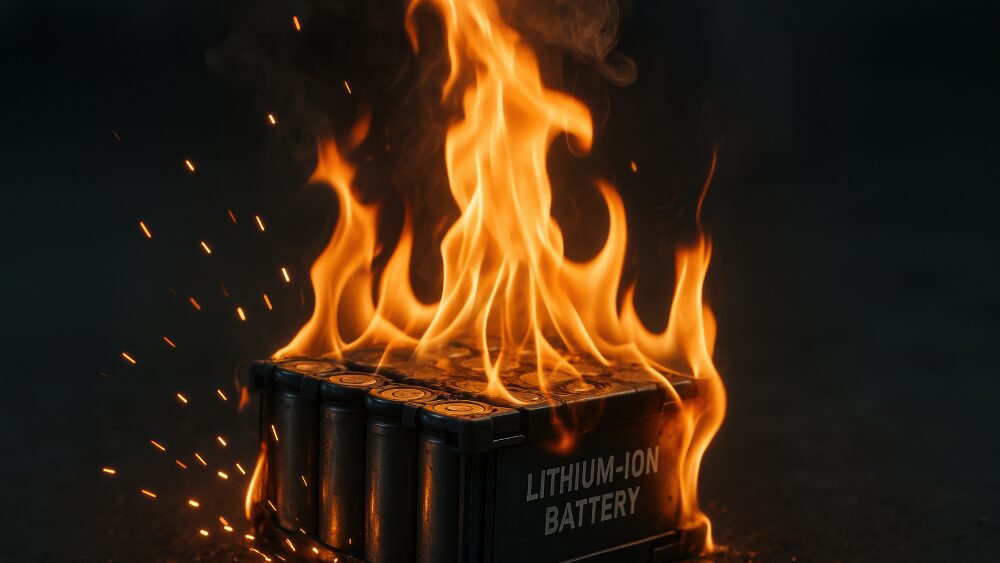
Battery fires are unique. Their behaviour is unpredictable and their capacity to reignite sets them apart from conventional fires. For businesses and individuals, the consequences of battery fires can have a lasting impact, leading to operational downtime and, in the worst case, result in serious injury or loss of life.
In this blog Lee Wilkes, Supply Chain Quality & PFX Product Manager at Chubb Fire & Security UK, highlights the risks battery fires pose in commercial settings. He also discusses the most common type of battery fires, the challenges they present and the steps to manage a safer workplace.
A Significant Risk in Commercial Settings
There has been a sharp rise in the use of batteries over the past few years, and as more industries make the transition to become more sustainable, the trend is set to continue.
Moving away from technology reliant on fossil fuel and towards less polluting alternatives has some very clear advantages. However, the risks are just as significant. The adage. There is no smoke without fire, which has long been the red flag to evacuate and act, no longer applies.
Unlike traditional blazes, which often show smoke before ignition, lithium-ion battery fires can explode into flames instantly, without warning.
Car dealerships and service centres are a clear example of areas for concern. Luxury brands such as Porsche, BMW and Tesla are investing heavily in electric fleets and on-site charging infrastructure. A single EV battery fire in a showroom or service bay could spread quickly to other vehicles, property and staff, making early detection and containment critical.
Warehouses and logistics centres are also high risk. Electric forklifts, pallet trucks and other battery-powered machinery are increasingly popular thanks to efficiency and emissions benefits. But a battery fault or charging issue could ignite combustibles in the area, leading to catastrophic damage.
The Most Common Causes of Battery Fires and High-Risk Environments
Lithium-ion batteries are volatile, particularly when they are poorly manufactured, damaged, or handled with a lack of care. The most common causes of battery fires include:
1. Thermal runaway – This chain reaction occurs when a cell overheats, causing neighbouring cells to ignite. Once it begins, the process is almost impossible to stop until the battery is fully burnt out.
2. Physical damage – Vehicle collisions, dropping devices, or even something as simple as scraping a battery pack against a speed bump can compromise the protective casing. Internal short circuits that follow can trigger sudden ignition.
3. Overcharging or faulty charging equipment – Poorly designed or counterfeit chargers often lack proper voltage regulation, leading to overheating. Continuous charging without supervision also increases the likelihood of thermal runaway.
4. Poor ventilation and heat build-up – Batteries stored or charged in confined, poorly ventilated areas accumulate heat. In warehouses and residential buildings, this lack of airflow can dramatically increase risk.
5. Substandard or counterfeit products – Cheaply made batteries often bypass rigorous testing and are a major contributor to e-bike and scooter fires. Many products rely on self-certification of CE markings, which allows low-quality imports to flood the market unchecked.
Regulatory Progress
Currently, no universal fire extinguisher regulation exists for lithium-ion batteries. However, the following standards are currently underway to improve battery and consumer safety:
• Dutch Standard (NTA 3811): Already published, this provides testing protocols for small-scale batteries up to 600 watt-hours –suitable for laptops and e-bikes, but inadequate for larger EVs or industrial batteries.
• European Standard EN3 Part 11: Expected in 2026, this will extend existing fire extinguisher regulations to lithium-ion batteries. It will introduce a new “Class L” fire category and potentially new colour coding. This will offer clarity for the first time on how extinguishers must be tested and certified.
• International Collaboration: Committees involving experts from across Europe, including the UK, are working to align standards. While progress is slow due to translation issues and national differences, a unified framework is critical.
Current and Future Systems to Suppress Battery Fires
Despite the challenges, significant work is being done to develop and refine systems capable of dealing with battery fires. The challenge for consumers is that many of the products that are marketed as a solution are not as effective as they should be.
Having said that, current systems continue to improve with innovative solutions currently in development. Such as:
1. Containment Systems – Products such as EV blankets and liquid fire blankets are already on the market. While imperfect, they buy valuable time for evacuation and limit spread to neighbouring assets.
2. Specialised Extinguishers – New extinguishers, such as those using water-based additives, are being trialled for small battery devices. Standards such as EN3 Part 11 are set to be expanded to agree with all European and UK notified bodies and will provide the benchmark needed to separate effective products from ineffective claims.
3. Battery Cooling Tanks – Some fire brigades and manufacturers have trialled immersing burning EVs in containers of water to cool cells. However, this produces toxic steam and is impractical at scale.
4. Detection and Monitoring Systems – Sensors that detect early signs of thermal runaway – such as abnormal gas emissions or temperature spikes – are being integrated into storage facilities and vehicles. Preventing ignition before it starts may prove more effective than suppression after the fire is ablaze.
5. Next-Generation Batteries – Perhaps the most promising solution lies not in suppression but prevention. Safer chemistries, such as solid-state batteries, aim to eliminate volatile liquid electrolytes, and if widely adopted, could transform the risk landscape in the coming decade.
What Needs to Change
At Chubb Fire & Security we’re focusing on creating as much awareness as possible to reduce the risk caused by battery fires. This includes leading the drive to innovate thermal and cell stability for safer battery design, as well as running campaigns to enlighten consumers on the dangers and difficulty of putting out fires when they occur.
To address these challenges, industry bodies, regulators and manufacturers are collaborating on new standards like EN3 Part 11. Stronger regulation of imports and better public understanding of product limitations are also urgently needed to bring risk under control.
Lithium-ion technology is a growing market, and it’s our responsibility to make sure we remain safe and vigilant, especially in high-risk environments.
Contact Chubb Fire & Security UK to learn more about its fire safety products and solutions.
© 2026 Chubb Fire and Security. All rights reserved.
The information provided in this blog is for general informational purposes only and does not constitute professional advice. Chubb Fire and Security is not responsible for any actions taken based on the information provided. This blog is not an advertisement or advice document. You are responsible for complying with any legal or regulatory requirements that apply to you.
Chubb Fire and Security reserves the right to modify the content and offers mentioned in this blog without prior notice.